
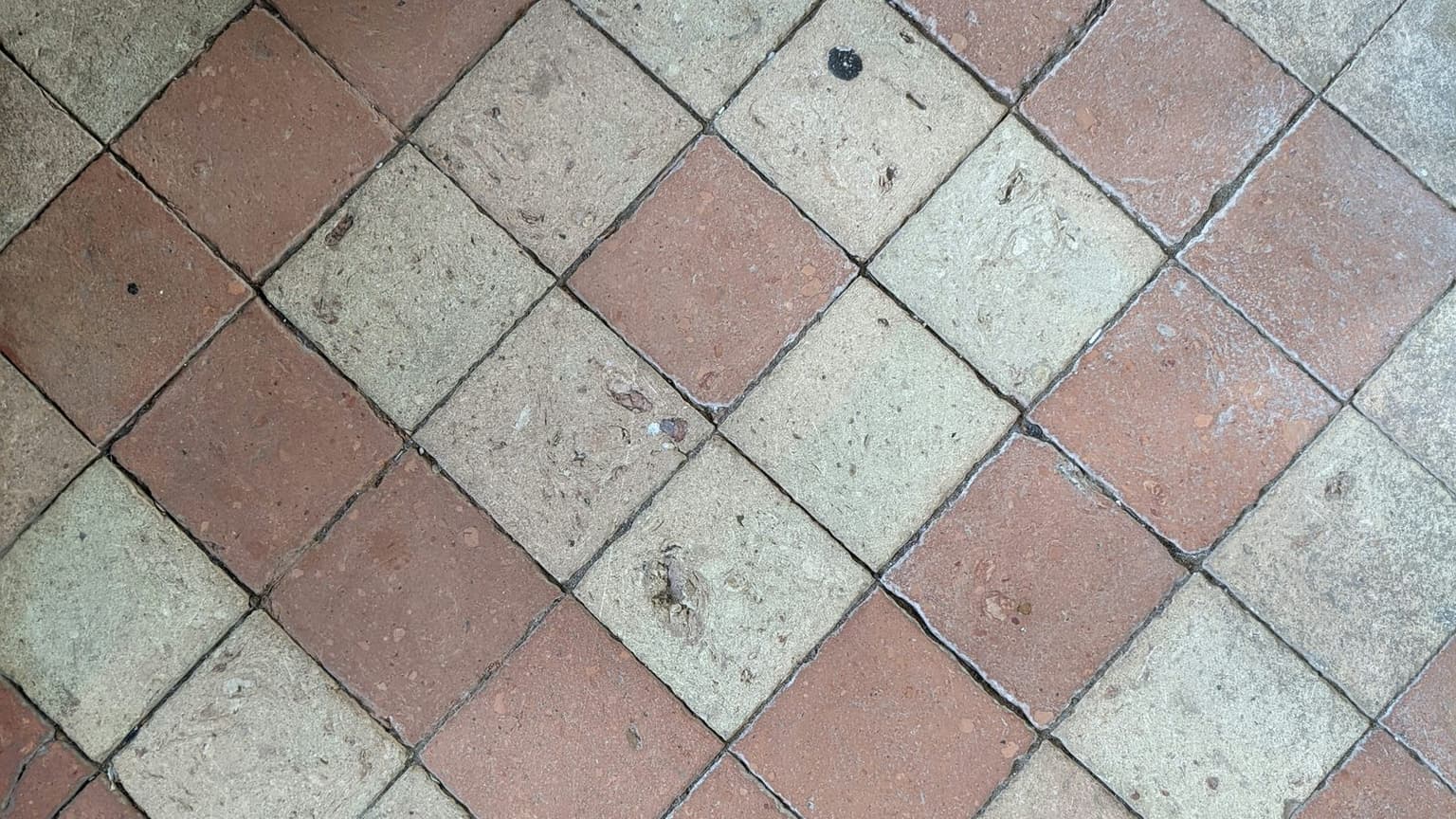
Grout sits a little lower than the tile around it, and it's porous. Those two facts explain almost every grout job that ends with sore knees and a floor that looks about the same.
The tile face is smooth and glazed. A mop glides over it and it looks clean. The grout line is a shallow, rough-textured channel, so the mop skips the bottom of it and leaves a little of its dirty water behind in the groove each pass. Over months, dust, cooking grease, soap film and tracked-in grit settle into that channel and soak into the pores. By the time the lines look dark, the dirt is below the surface, and a sponge or hand brush mostly polishes the top of it.
Where the weekend project goes wrong
Hand scrubbing usually fails in one of four ways.
Shallow tools, deep dirt
A brush moves the surface layer around. It rarely reaches what's soaked into the grout, and scrubbing harder with a stiff brush roughs the grout up so it grabs dirt faster next time.
Residue
Plenty of grout cleaners brighten the line on day one and leave something behind that pulls fresh soil back in. A floor that looks great Sunday and dingy by Thursday is telling you that.
Uneven results
Everybody works hardest in the middle of the room where the stain is obvious. The edges along the cabinets, around the toilet base and against the tub get less attention, and the floor ends up two-toned: a brighter center surrounded by a dark frame.
Time
Doing it properly means small sections, letting the product sit, scrubbing evenly, rinsing with clean water and letting it dry. On a kitchen plus two baths, most people run out of patience somewhere in the second room.
The two worst rooms
Kitchens and bathrooms are the hardest rooms for different reasons. Cooking grease travels through the air as a fine mist and lands on the floor well away from the stove, then holds onto every bit of dust. Bathrooms get soap film, body oil and moisture that hangs around if the fan doesn't run. And in a lot of newer Bay Area builds, tile runs through the entry, living room and kitchen, so it's taking sand off shoes and wet flip-flops all day too.
If you want to try it yourself first
Go ahead. Light buildup sometimes comes out with care. Here's the order that gives it a fair shot:
- Vacuum or sweep first. Wet grit turns into mud and gets pushed into the lines.
- Pick one grout-safe cleaner and stick with it. Mixing products or hopping between internet recipes just stacks residue.
- Work a small section, let the cleaner sit as long as the label says, then scrub gently and evenly with a grout brush.
- Rinse with clean water and a clean cloth or mop head. Skipping this step is the most common reason a scrubbed floor dries hazy.
- Let it dry completely before you judge. Grout looks different wet.
If a section you did carefully still looks about the same once it's dry, stop. More scrubbing won't change the answer, and it wears the grout.
What the buffer does
Our tile work is done with a machine buffer. Its rotating pad works our cleaning solution evenly across the whole floor, tile face and grout lines alike, with steady pressure no arm can keep up for a full kitchen. That agitation lifts the packed-in buildup out of the grout channels, and the loosened soil gets picked up off the floor. Edges get the same treatment as the middle of the room, which is how you avoid that dark frame.
Before starting, the technician walks the tile with you, points out any problem areas, and prices the job. The floor is ready to walk on soon after, and nobody's been on their knees. Details are on the tile and grout cleaning page, and there's $45 off tile on the coupons page. For more depth on tile specifically, our sister site Tile Done Right is all tile, all the time.
Most homes do well with a professional cleaning every 12 to 18 months, busier kitchens and entries a bit sooner.
Grout problems a buffer can't solve
Some grout problems are repair problems. Cracked or crumbling grout, gaps where grout has fallen out, and loose or hollow-sounding tiles need a tile setter. Grout that went blotchy after bleach or an acid cleaner has lost color, which is a different thing from being dirty, and cleaning won't bring it back.
Watch the bathroom too. If the same corner keeps darkening and the room smells musty no matter how often it's cleaned, the room is staying damp, and the exhaust fan (or a leak) needs a look before the floor does.
Give the brush one honest try, and if the lines still look gray when they dry, call 281-786-4379.