
Most of the carpet we clean in Clear Lake sits in houses that were built for people who worked at the space center, and the year a house went up tells us a lot before we've unloaded anything.
That's a generalization, and plenty of homes break it. Still, after enough living rooms between NASA Parkway and Bay Area Boulevard, the patterns are hard to miss. Here's how we read them.
The 1960s and 70s houses
Johnson Space Center opened in 1963 and the first neighborhoods filled in around it fast. Those houses are on their third or fourth round of carpet by now. If yours took water in Ike, the carpet in it is a good deal younger than the walls.
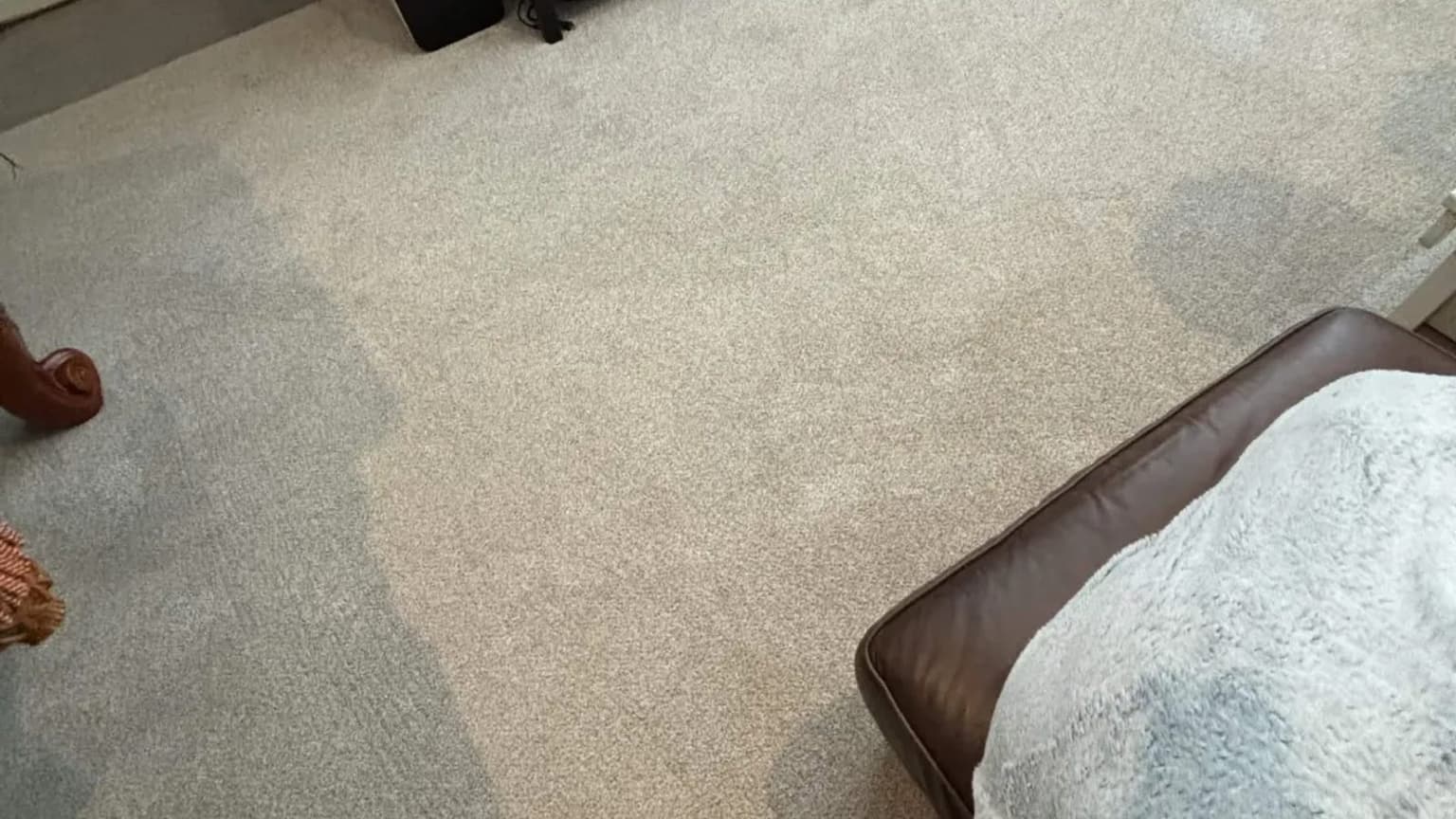
The floor plans are the giveaway. Long, narrow hallways with a dark stripe down the middle. A family room where everyone takes the same line between the sliding door and the kitchen, because the furniture only fits one way. That path from the back door is almost always the worst carpet in the house, since it's where yard grit and sand from the boat come in.
Some of that stripe is wear, though. When fibers have been crushed and frayed for years, cleaning lifts the soil packed around them but can't grow them back. On the walk-through we'll show you which parts of the lane are soil (those brighten up) and which are worn (those stay a shade off). Most homeowners are surprised how much of it turns out to be soil.
The 1980s and 90s builds
Bigger rooms, more open plans, and carpet in every bedroom plus a formal living room nobody really sits in. These houses tend to have two different carpets under one roof. The den gets hammered. The upstairs bedrooms mostly need a refresh.
So clean them on different schedules. A lot of families here do the busy rooms more often and pick up the bedrooms every other visit, which lines up well with the three-room carpet deal on our coupons page.
The furniture matters in these homes, too. One family we cleaned for in 77058 vacuumed constantly and still couldn't get the living room to feel fresh. The traffic lanes were part of it. The rest was the sofa, where the pets spent their afternoons and where dust and odor had worked into the fabric. We did the carpet and the upholstery in the same visit, and that's what finally made the room feel finished. Cleaning only the floor would have left half the problem sitting on four legs.
Newer homes with more tile than carpet
Newer Texas builds go heavy on tile and wood-look plank downstairs, with carpet left in the bedrooms and on the stairs. Less carpet doesn't mean less dirt per square foot. Every trip upstairs lands on the same treads, and the strip of carpet where it meets the tile catches whatever sand comes off shoes.
These are also the homes that get the rental-machine treatment, because there's "only a little carpet." I'd skip it. A rental puts down a lot of water and soap and can't pull much of either back out, so the carpet stays damp for hours and the leftover soap grabs new dirt. Two weeks later the stairs look worse than before you started. We see it constantly.
What stays the same in every house
The age of the house changes where we look. The process stays put.
First comes a slow lap of the house together, where you show the technician what's been bugging you: the spot by the recliner, the hallway, the smell near the dog bed. The price is settled on that lap, before any work. Spots and heavy lanes get a pre-treatment, and then the whole room gets our carbonated, soap-free clean, so the lane you were embarrassed about blends back in with the carpet beside it. Most rooms are dry in about an hour. Since nothing sticky gets left in the fibers, carpets stay cleaner longer between visits.
Between cleanings, vacuum the lanes slowly and in two directions, keep a mat at the back door, and blot spills. That handles most of it. The rest of the details live on our carpet cleaning page.
Call 281-786-4379 and tell us what year your house was built. We'll probably be able to guess what your hallway looks like.