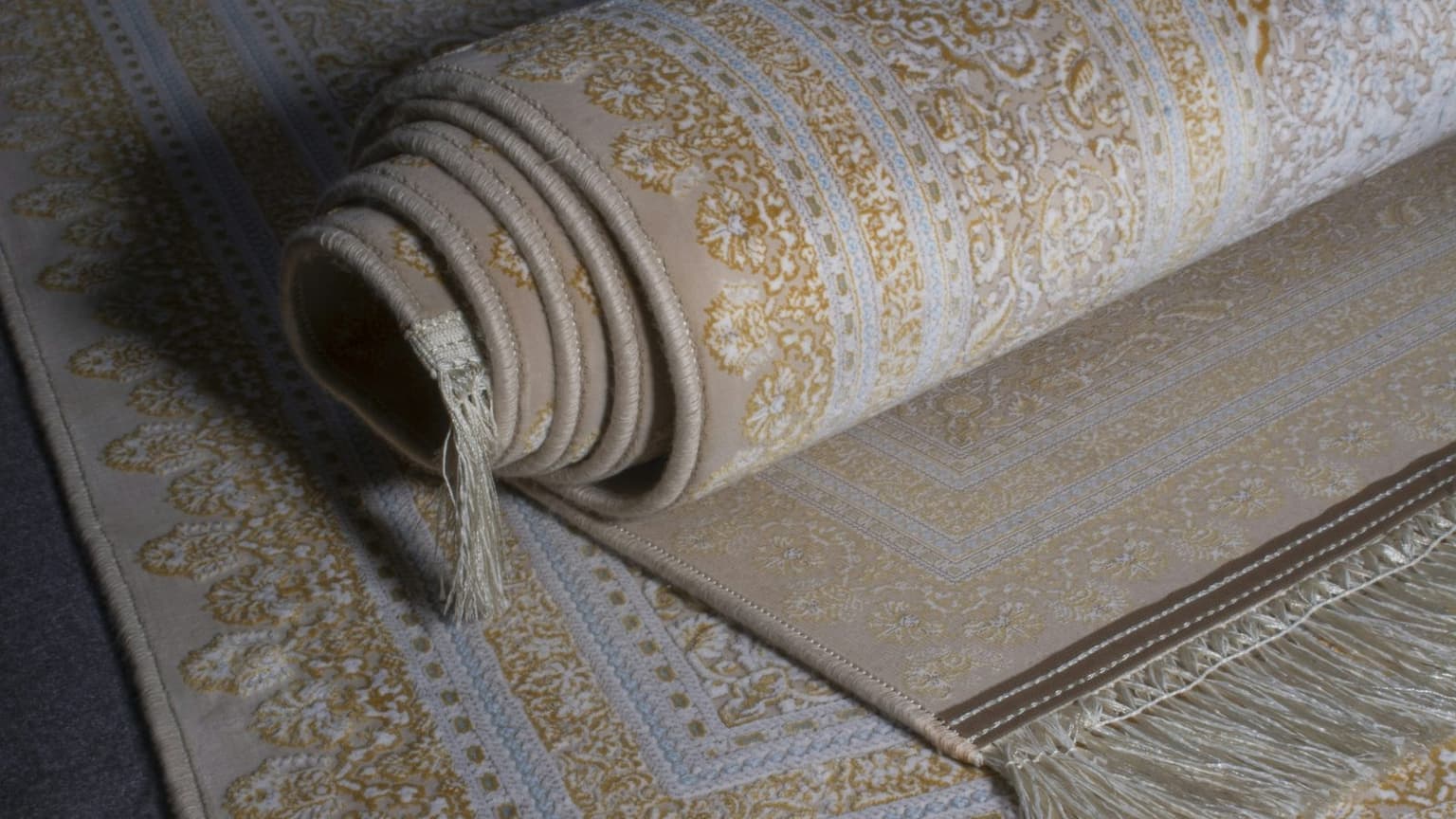
A good wool rug can take ten years of shoes and dogs and still look decent. One bad Saturday afternoon with the wrong bottle can undo it.
That's the frustrating part about specialty rugs. The damage people call us about usually started as a sensible impulse (clean it right away, clean it hard) applied to a rug that needed a gentler approach. Below are the mistakes we run into most, roughly in order of how often we see them. Some get a sentence. A couple need more.
The mistakes
1. Treating the rug like wall-to-wall carpet
Installed carpet is made to be cleaned in place with fairly standard chemistry. An area rug might be wool on a cotton foundation, viscose glued to a backing, or jute that browns when it gets wet. The same spot spray, the same rental machine and the same technique won't suit all of those, and the rental machine is the worst offender: it puts down a lot of water and pulls back only part of it.
2. Stacking products
This is the one we see every week. Dish soap goes on first. When that doesn't do it, a carpet spray. Then vinegar because the internet said so, then a deodorizer to cover the smell of all the above. Four chemistries in one afternoon can lighten the dye, leave a sticky film, and make the spot harder for us to treat afterward because now we're removing residue as well as the original stain. If the first gentle try didn't work, the next move is to stop.
3. Too much water
Water feels harmless, which is why it does so much damage. It soaks past the face of the rug into the foundation or backing, and the top can feel dry while the middle stays wet for a day or more. In that time, dyes can migrate (a red border creeping into a cream field is the classic picture), the rug can shrink or ripple, a glued backing can loosen, and soil from deep in the pile wicks up and dries as a brown ring. On jute or sisal, water alone can leave browning that doesn't come out.
4. Scrubbing
A stiff brush makes the stain feel like it's losing. What it actually does is fray and untwist the fibers, so the spot ends up fuzzy and catches light differently from the rest of the rug. On silk and viscose a coin-sized spot can become a palm-sized texture change. Blot with a white cloth, press and lift, and switch to a clean part of the cloth as it picks up.
5. Heat to dry it faster
Hair dryers and space heaters can shrink wool, curl edges and soften the adhesives in tufted rugs. A fan moving air across the rug is fine.
6. Going after the fringe
Fringe looks dirtier than the rest of the rug, so it gets bleached or scrubbed. On a hand-knotted rug those strands are the warp ends, running the full length of the rug, so bleaching them weakens the rug's skeleton. Vacuum from the center out toward the fringe and keep the beater bar off it.
7. Covering pet urine with fragrance
Urine runs down through the pile into the foundation, and on a rug sitting over carpet it can go straight through into the carpet and pad below. A spray can make the room smell fine for a day. When the perfume fades, or on a sticky August afternoon, the odor comes right back, because the source is still there. Urine needs a treatment that reaches where it went; here's how we treat urine.
8. Skipping the dye test
Before anything wet goes on a rug you care about, hold a damp white cloth on a dark part of the pattern somewhere hidden, like under where the sofa sits. Color on the cloth? Stop there and call someone.
Damage that comes back out, and damage that doesn't
Some of it. Residue from too much soap usually comes out with a proper cleaning, and spots that keep reappearing often improve once the old product is removed along with the original stain. Many odors respond well once the source is treated.
Other damage is permanent. Bleach and harsh stain removers take dye out of the fiber, and no cleaning puts it back. Fibers frayed by scrubbing stay frayed. Badly migrated dye can sometimes be improved, but full restoration isn't always possible, and we'll tell you honestly what to expect before any work begins.
What a careful cleaning looks like
Your rug gets cleaned where it lies, on your own floor, and never leaves the house. The technician looks at the fiber, the construction, the fringe and any old repairs, tests the dyes in a hidden spot, asks what's already been tried on the problem areas, and settles the price with you first. The cleaning itself uses low moisture, and the solution comes back out of the pile with the soil, so the rug isn't left damp or tacky. More on the area rug cleaning page.
If the rug in question is a newer purchase and you're wondering how often to have it done at all, the schedule by household type is in how often should handmade rugs be professionally cleaned.
Next time something spills on a rug you love, blot it, test it, and leave the rest of the cabinet closed. Questions in the meantime: 281-786-4379.