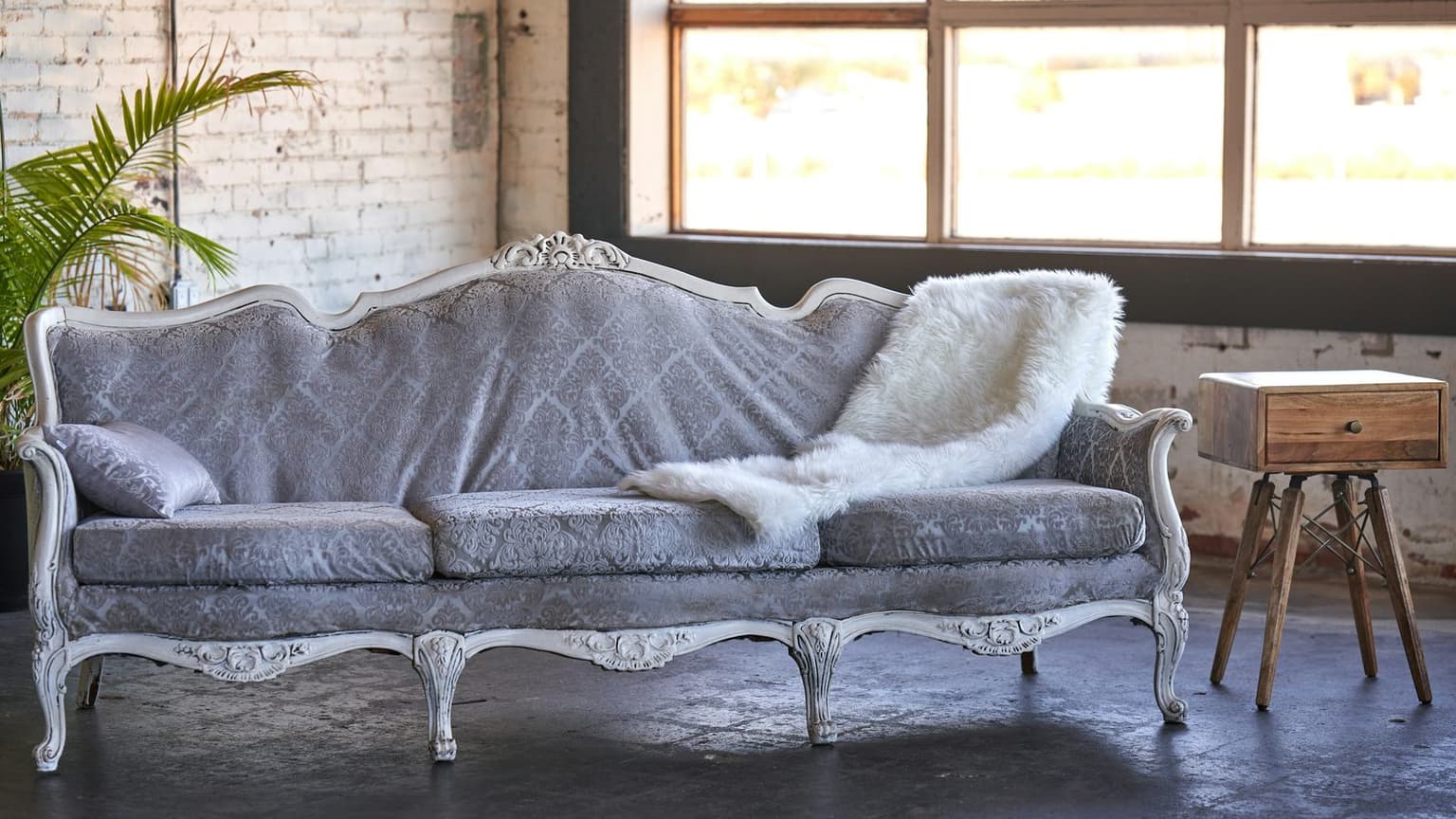
The spill is rarely what ruins a couch. The cleanup is.
A splash of marinara on a sofa arm at 7 p.m. is a fixable problem. By 7:30, after a wad of paper towels, a squirt of dish soap, a kitchen sponge, a stain spray from under the sink and a few minutes with a hair dryer, it has become a pale ring the size of a dinner plate with a sticky center that will go gray within a month. We see the second version far more often than the first. So here's our position, and we'll stand by it: on upholstery, doing less in the first ten minutes beats doing more, and dish soap should come off the list entirely.
Food is several stains at once
Pizza is grease, tomato dye and crumbs in one hit. Ice cream leaves sugar and milk. Coffee and juice bring color. Each part wants a different treatment, and a home remedy aimed at one of them tends to ignore the others, which is why a spot can look half gone and then stall.
Then there's wicking. A couch has layers, and a spill that soaks past the fabric into the cushion foam doesn't come out when you blot the top. The surface looks better. As the cushion dries, moisture climbs back up and carries residue with it, so a faint shadow shows up the next morning in the same place. Most people read that as the stain coming back and hit it again with more water, which drives the next round deeper. That loop is how a quarter-sized spot turns into a ring across the whole cushion.
Soap does its damage more quietly. Whatever doesn't rinse out stays tacky, and tacky fabric grabs dust and skin oil from everyone who sits there. For a week the spot looks great. After that it's the dirtiest patch on the sofa. Our own upholstery process is soap-free for exactly that reason.
The first ten minutes
Lift any solids with a spoon or the dull side of a butter knife, starting at the rim of the mess and scooping inward so it doesn't get dragged wider. Then blot with a white cloth or plain paper towel, pressing and lifting and turning the cloth as it picks up. A red dish towel can leave its own dye on a beige cushion.
Before anything wet touches the stain, find the cleaning code tag. It's usually under a seat cushion or stapled to the frame. If it says the fabric tolerates water, dampen a cloth (wrung out hard) and try it on a hidden spot first, then let that spot dry completely. Some fabrics look fine damp and only show a ring once they've dried.
Dry with moving air. A box fan pointed across the cushion is fine; a hair dryer is a gamble, since heat can set sugary stains and shrink some fabrics.
And if the stain stops improving after one careful pass, stop there. That's the point where most DIY attempts turn into repair jobs.
The chairs nobody checks
The couch gets the attention, but in plenty of Clear Lake houses the dining chairs are the worst upholstery in the place. They take food at close range, every day, in the same two spots: the front edge of the seat and the top of the back where hands grab to pull the chair out. A lot of them pull double duty as homework and work-from-home seats too. Run your palm along the front edge of a fabric dining chair that's a few years old and you'll usually feel a slight stiffness. That's oil and crumbs worked into the weave.
Sofa armrests tell a similar story. Skin oil and lotion darken them so gradually that nobody notices until a cushion gets flipped and the contrast jumps out. Vacuuming won't touch that kind of soil, though it's one of the first things a professional cleaning takes off. Pet dander and hair settle into textured fabric and seams the same way, which is why a sofa can look tidy and still leave a gray mark on a white cloth.
What a professional cleaning fixes, and what it can't
When we clean upholstery, the technician looks over the fabric and the problem spots with you, and you get the price before anything gets wet. Then the food marks, armrests and the dog's corner get pre-treated, and the whole piece is cleaned so it dries evenly, with no bright clean square sitting next to a dingy cushion. We use very little moisture, so most furniture is ready to sit on the same afternoon.
What cleaning can't do is reverse sun fading from a west-facing window, rebuild foam that has gone flat, or put back color that a bleach-based spray already took out. Fabric that's worn thin stays thin. We'll tell you that up front.
For a busy family room, once a year is a sensible rhythm, and closer to every six months with pets or small kids. The between-visits routine (cushion rotation, vacuuming, what to check monthly) is in our post on how upholstery cleaning helps your couch look better longer. Service details are on the upholstery cleaning page, and there's a $25-off upholstery offer on the coupons page. For more on fabric types and those cleaning codes, our sister site Rug & Upholstery goes into the fabric side in more depth.
If marinara hits the sofa tonight, put the dish soap back under the sink and reach for a spoon.