Menu
Same-Day Service Available!

Upholstery Cleaning in Clear Lake, Texas matters the moment food lands on your couch or dining chairs. A small spill can turn into a bigger problem fast. Pasta sauce, chocolate, coffee, soup, oil, and juice can sink into fabric before you even grab a towel. Once that happens, the stain is no longer just sitting on the surface. It starts settling into the fibers, the seams, and sometimes the cushion below.
Here in Clear Lake, Texas, we know furniture gets used hard. Families eat in the living room. Kids bring snacks to the couch. Guests sit with drinks in hand. Dining chairs often do double duty as homework spots, work-from-home seats, and everyday gathering places. Because of that, food stains on upholstery are common. They are also frustrating, especially when a stain keeps showing up even after you think you cleaned it.
Our team takes a practical, family-first approach to Upholstery Cleaning. We want furniture to look refreshed, feel comfortable, and dry quickly without leaving behind sticky residue. We also care about using methods that make sense for real homes. Safe-Dry has more than 30 years of experience in carpet, rug, and upholstery cleaning, and that long history has shaped how we handle everyday stains with care, training, and consistency. We are committed to customer satisfaction, quick-drying service, and family-safe cleaning methods that avoid harsh chemicals and soapy buildup.
Food stains are tricky because they are rarely just one thing. A pizza stain may include grease, tomato dye, and crumbs. Ice cream can leave sugar and dairy behind. Fried foods can create an oily patch that grabs more dirt later. Meanwhile, bright sauces can spread fast and leave behind a dull shadow even after the surface looks clean. As a result, the best way to remove food stains from a couch and chairs is not to scrub harder. It is to clean smarter.
Good Upholstery Cleaning also protects the feel of the furniture, not just the look. A couch should still feel soft after cleaning. A dining chair should not feel crunchy, stiff, or damp for hours. That is why method matters. Too much water, too much soap, or the wrong stain remover can make a small food spill much worse. In some cases, it can even leave a ring that is more noticeable than the original stain.
If you are staring at a fresh spill or an old food mark that never fully came out, keep reading. In this guide, we will walk through the safest first steps, the biggest mistakes to avoid, and when professional Upholstery Cleaning in Clear Lake, Texas becomes the better option.
The biggest mistake most people make is rushing in with the strongest cleaner they can find. It feels like the right move, but it often backfires. Many store products are too aggressive for upholstery. Some leave residue behind. Others bleach color, spread the stain, or push it deeper into the fabric. A couch and chair stain usually responds better to a calm, step-by-step process.
The first thing to remember is that upholstery is not all the same. Some fabrics handle light moisture well. Others do not. Some have a tight weave that keeps a stain near the surface. Others let liquid sink in quickly. Microfiber, natural fiber blends, textured fabric, and delicate upholstery all react differently. Because of that, safe cleaning always starts with paying attention to the material.
Food spills are also unpredictable because they change as they dry. A fresh spill may look simple at first. Then, a few hours later, it becomes sticky, darker, or more noticeable. Oils cling to fibers. Sugars harden. Dyes settle in. In addition, crumbs and residue can work their way into seams and cushion edges. This is one reason repeated DIY cleaning does not always fix the problem. You may remove part of the stain while leaving the rest behind.
Here in Clear Lake, Texas, warm weather and busy homes make quick cleanup even more important. The longer food stays in the fabric, the more time it has to settle, spread, and collect everyday dust. A stain that starts as a tiny lunch spill can end up looking like a traffic spot on the arm of a sofa or the seat of a chair. Meanwhile, moisture-heavy cleaning can slow drying and leave the fabric feeling damp longer than it should.
A better plan starts with understanding what is safe and what is risky. Safe cleaning means removing solids gently, blotting instead of rubbing, and using the mildest appropriate method first. Risky cleaning means scrubbing hard, soaking the fabric, mixing random products, or guessing your way through delicate upholstery. In many cases, the damage from the wrong cleanup is harder to fix than the original spill.
Professional Upholstery Cleaning becomes especially helpful when the food stain is greasy, colorful, old, or spread across a larger area. It also makes more sense when the stain keeps coming back, the fabric is delicate, or you are worried about leaving rings and water marks behind. A careful process does more than remove visible residue. It helps restore comfort, appearance, and freshness without making the furniture harder to use afterward.
Start by identifying the food stain. This sounds simple, but it matters more than most people expect. A grease stain from takeout behaves differently than a juice spill. Chocolate, soup, coffee, frosting, salsa, and butter all leave behind different types of residue. Some stains are oily, sugary and sometimes may contain strong color. Each one reacts differently to moisture and cleaning products.
Take a close look at the spot. Is it wet, sticky, crusty, greasy, or bright in color? If the spill is fresh, note whether liquid is still sitting on the surface. If it is older, check whether the stain feels stiff or oily. Also, look for the furniture cleaning code if it is available. That tag helps you avoid using the wrong method on the wrong fabric.
This first step slows the process down in a good way. It helps you avoid panic cleaning, which is often what causes spreading, rubbing damage, or water rings.
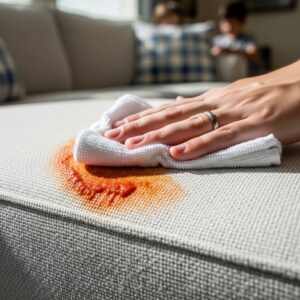
If food is still sitting on the couch or chair, lift it off first. Use a spoon, dull edge, or dry paper towel to scoop or lift away the mess. Work carefully. Try not to press the food deeper into the upholstery while removing it.
Start from the outside edge of the spill and move inward. This helps prevent spreading. If you are dealing with crumbs, scrape softly. If the spill is thick, such as yogurt, frosting, or sauce, lift it in layers rather than wiping it across the fabric.
This step matters because surface residue keeps working against you if it stays in place. You want the fabric as clear as possible before you start blotting or using any moisture. A gentle start also protects the weave and keeps the stained area from getting bigger.
Once the solids are gone, blot the area with a clean white cloth or plain paper towel. Press down lightly, then lift. Repeat with a fresh section of the cloth each time. This helps pull out moisture and loose residue without grinding the stain into the fabric.
Blotting gives you more control. It also helps you see how much material is still coming up from the upholstery. If you notice oily transfer or color on the cloth, keep working slowly rather than switching to a stronger cleaner too fast.
Before you try any cleaning solution, test a small hidden area. Use the mildest option first. A lightly damp cloth is often enough for a first pass on many food stains. The goal is to see how the fabric reacts before you touch the visible area.
This is where many homeowners skip an important safety step. Some fabrics darken easily. Others may show a ring as they dry. A hidden test spot tells you whether the upholstery can handle light moisture or whether the fabric needs a more cautious approach.
Keep the cloth only slightly damp. Never soak it. You are not washing the entire cushion. You are checking the response of the material. If the test area looks fine once it dries, you can move forward with more confidence.
For many food stains, a very small amount of mild dish soap mixed with water can be enough when the upholstery allows water-based cleaning. Dip a clean cloth into the solution, then wring it out well. It should feel damp, not wet. Gently work from the outside edge of the stain toward the center.
This is where patience makes a difference. Light passes often work better than one heavy attempt. You are trying to loosen the residue bit by bit. You are not trying to flood the stain out of the furniture. Too much liquid can sink into the cushion and make the area harder to dry.
If the stain starts to lift, keep going in small sections. Use clean parts of the cloth as you work. A dirty cloth can put residue back into the fabric. Meanwhile, overworking the same spot can roughen the texture and leave the area looking worn.
After applying a mild cleaning method, blot the area again with a dry white cloth. This step helps pull out loosened residue and extra moisture. It also helps you judge whether the stain is improving or simply being pushed around.
A lot of DIY attempts fail because people stop too early or add more cleaner before removing what has already loosened. Blotting between passes gives you a cleaner result. It keeps the process controlled and helps the fabric dry more evenly.
If you see progress, continue carefully. If the stain stops improving, do not keep adding more product. That usually leads to residue buildup, slow drying, and a patch that feels stiff later.
Some food stains fade while damp, then reappear as the fabric dries. This is common with grease, sugary drinks, colored sauces, and spills that reached below the surface. If the stain starts coming back, you may be dealing with deeper residue in the cushion or padding.
This is a key moment in Upholstery Cleaning. It tells you whether the stain is still a surface issue or whether it has moved deeper into the furniture. Grease stains are especially stubborn because they grab onto fibers and attract more dust after a basic wipe-down.
If the mark keeps returning, do not respond by soaking the spot again and again. Repeated wetting often creates a larger ring and makes drying harder. Instead, treat that as a sign that the stain may need a more thorough professional cleaning approach.
Drying matters just as much as stain removal. Once the stain looks better, use a dry towel to blot away remaining moisture. Then allow airflow around the area. You can use a fan to help move air across the fabric, but avoid blasting heat directly onto the upholstery.
Fast, controlled drying helps reduce the chance of rings, odor, or a damp feel. It also helps you see the true final result sooner. Some fabrics look clean while wet and then show shadowing as they dry. Good airflow helps the material settle more evenly.
Here in Clear Lake, Texas, keeping moisture under control is especially important. A couch or chair should not stay damp for long. A quick-drying mindset protects both comfort and appearance.
Safe methods are simple and controlled. Remove solids gently. Blot instead of scrub. Test a hidden spot first. Use mild moisture only when appropriate. Dry the area well. These steps lower the chance of damage and give you a better shot at removing the stain cleanly.
Risky methods are the ones people reach for when they feel frustrated. Heavy scrubbing, oversaturating the fabric, mixing household chemicals, using colored towels, and repeating strong treatments can all make the stain worse. Even if the spot fades at first, the fabric may end up stiff, discolored, or ringed afterward.
A good rule is this: if the stain is improving with gentle steps, keep the process light. If it is not improving, stop before the fabric becomes the next problem.
Some food stains need more than spot cleaning. If the spill is large, greasy, set in, or spread across several cushions, professional help is often the smarter choice. The same goes for delicate upholstery, repeated stain return, or furniture that still feels sticky or dull after DIY treatment.
When food stains keep coming back or home methods start to feel risky, scheduling professional Upholstery Cleaning in Clear Lake, Texas can save time and prevent avoidable damage. A deeper cleaning approach helps remove what is trapped below the surface while still protecting the look and feel of the fabric.
Professional help is not just for dramatic stains. It also makes sense when you want the furniture to dry quickly, feel fresh again, and look more even overall. Sometimes the safest choice is knowing when to stop the DIY cycle and let trained hands take over.

One of the biggest benefits of Upholstery Cleaning in Clear Lake, Texas is how much it changes the overall feel of a room. A couch or chair does not need to be completely covered in stains to affect the space. Even a few food marks on the arms, seat cushions, or chair backs can make the room look more worn than it really is.
When food residue stays in the fabric, it does more than leave color behind. It can also leave sticky buildup, greasy patches, and dull areas that attract more dirt. As a result, one spill often turns into a larger-looking problem over time. A proper upholstery cleaning process helps remove that residue and restore a more even look across the fabric.
This matters in Clear Lake homes where furniture gets used every day. Living rooms are not just for show. They are where families watch movies, eat snacks, help kids with homework, and relax after work. Dining chairs often do double duty too. They are used for meals, projects, and busy everyday routines. Cleaner furniture helps those spaces feel more put together without making the home feel overly formal or hard to live in.
A fresher room also feels easier to maintain. Once the couch and chairs look clean again, the rest of the room often feels cleaner too. This is one reason Upholstery Cleaning can have a bigger impact than people expect. It improves the furniture, but it also lifts the look of the entire space.
Food stains are not always obvious after the first day. Sometimes the visible color fades, but the residue stays behind. Oils, sugars, and tiny food particles can remain in the fibers, even after the spot looks better on the surface. Over time, that trapped residue can make the upholstery feel less fresh.
This is where a deeper cleaning approach matters. Upholstery Cleaning helps remove what is left behind after the spill dries. It is not just about making the stain lighter. It is about getting rid of the material that keeps attracting dust and making the fabric feel used up before its time.
In homes around Clear Lake, Texas, this benefit is especially helpful because couches and chairs often see steady traffic. A seat cushion that gets used every day will collect more wear than a decorative chair in a formal room. If food residue is sitting in that fabric, daily use only presses it in further. A good cleaning helps break that cycle and gives the furniture a cleaner starting point.
This also helps with touch and feel. Residue can leave the fabric sticky, stiff, or rough. Once it is properly removed, the upholstery often feels more natural and comfortable again. That change may seem small at first, but it can completely change how inviting the furniture feels.
Food stains can make perfectly good furniture look old before its time. A couch may still have strong cushions and solid structure, but if the arms are spotted and the seats have stain shadows, the whole piece starts looking tired. The same is true for dining chairs. A few visible spills can make a clean dining area feel neglected.
Upholstery Cleaning helps protect the appearance of furniture by addressing stains before they settle in too deeply. Even when a stain does not disappear fully with one basic attempt, proper care can keep it from spreading, darkening, or becoming part of the fabric’s everyday look. That matters for homeowners who want furniture to stay presentable without replacing it too soon.
Appearance also matters because upholstery is highly visible. A rug may sit under furniture. Carpet is seen from standing height. However, couches and chairs are often right at eye level. People notice them quickly when they enter a room. Because of that, even small food stains can have a bigger visual effect than people expect.
Here in Clear Lake, Texas, where family homes, entertaining spaces, and open living areas are common, one stained chair or cushion can stand out fast. Upholstery Cleaning helps restore balance. It can make the furniture look more even, less patchy, and better cared for overall. That improvement often makes the whole room feel brighter and more finished.
A furniture stain is not always just a visual problem. It can also change the way the fabric feels. Food spills often dry with residue left behind. That residue can create a crunchy patch, a stiff section, or a sticky feel that never quite goes away with basic wiping. This is especially common with sugary drinks, sauces, dairy-based spills, and greasy foods.
Comfort matters because furniture is meant to be used. A couch should feel soft and easy to relax on. A dining chair should feel clean and comfortable during meals. When a spill changes the texture of the fabric, people notice it every time they sit down. In some cases, they even start avoiding that seat without realizing it.
Upholstery Cleaning helps restore comfort by removing the buildup that is affecting the surface. Instead of only fading the color of the stain, a better cleaning process focuses on the material trapped in the fabric. That can help the couch feel softer again and the chair feel more normal to use.
This is a real benefit for active households in Clear Lake, Texas. Furniture often has to keep up with family routines, guests, pets, and everyday traffic. When the fabric feels better, the whole piece becomes easier to enjoy again. That is a practical improvement, not just a cosmetic one.
One of the most frustrating parts of food stains is when they seem to come back. A spill may look gone right after spot cleaning. Then, after the area dries, the mark appears again. This usually happens because some of the residue stayed below the surface and slowly moved back up as the fabric dried.
Repeat stains are common with deeper spills. Sauces, oils, soups, coffee, and mixed food messes often go beyond the top layer of upholstery. Basic cleaning may improve the surface, but it may not fully remove what soaked into the cushion or padding. As a result, the same area keeps becoming a problem.
Upholstery Cleaning helps prevent that repeat cycle by dealing more thoroughly with what is left behind. This is one of the biggest practical benefits of getting the process right. It saves time, cuts down on repeated DIY attempts, and lowers the chance of over-cleaning one spot until the fabric starts looking uneven.
For homeowners in Clear Lake, Texas, this also means less stress. Instead of wondering whether the stain will show up again tomorrow, they can focus on getting the furniture back to normal. That kind of confidence is valuable, especially when the furniture is used every day and does not have time to stay off-limits.
Furniture handles a lot over time. Even without dramatic spills, couches and chairs collect body oils, dust, crumbs, and general wear. Food stains add another layer of stress to fabric that already gets steady use. If those stains are not handled properly, they can speed up how quickly the upholstery starts looking worn out.
A good cleaning routine supports longer-term furniture care. It helps prevent residue from becoming embedded in the fabric and reduces the chance of one spill turning into a permanent-looking problem. That does not mean every couch will stay perfect forever. Normal wear still happens. However, proper stain care can help the furniture age better.
This benefit is important because replacing furniture is expensive and inconvenient. Many homeowners would rather keep a couch or dining set looking good for longer than rush into replacing it because of a few ugly stains. Upholstery Cleaning helps protect that investment in a practical way.
It also supports better maintenance habits overall. Once people see how much of a difference good upholstery care makes, they often become quicker about handling spills and more careful about what products they use. That leads to better results over time and fewer preventable mistakes.
Not every stain should be handled the same way. Some are simple and respond well to careful home cleanup. Others are riskier because of the fabric type, the size of the spill, or the ingredients involved. Greasy foods, bright sauces, older stains, and repeated spots often need more than light blotting.
This is where professional Upholstery Cleaning becomes a real benefit. It gives homeowners another option before a stain becomes worse through trial and error. Instead of guessing which product might work, they can choose a safer path that focuses on the material, the stain, and the condition of the upholstery as a whole.
In Clear Lake, Texas, where busy households often need practical solutions, this can save both time and frustration. A professional cleaning can be especially useful when a chair has multiple food marks, when a couch cushion keeps wicking, or when the fabric seems too delicate for repeated DIY attempts.
If the stain keeps returning or the fabric starts reacting badly to home treatment, scheduling Upholstery Cleaning in Clear Lake, Texas is often the smarter move. It can help stop the cycle before the furniture ends up with rings, rough texture, or uneven fading from too many home fixes.
At the end of the day, one of the best benefits of upholstery cleaning is simple. The home feels better. Clean furniture makes a room feel more welcoming, more comfortable, and easier to enjoy. When the couch looks fresh and the chairs feel clean, daily life feels a little smoother.
Upholstery Cleaning in Clear Lake, Texas supports that everyday comfort. It helps food spills feel temporary instead of permanent. It helps furniture stay useful, attractive, and easier to maintain. Most of all, it helps the home feel cared for in a way people notice right away.
The best home care habit for Upholstery Cleaning in Clear Lake, Texas is simple. Act fast, but do not panic. A fresh food stain is almost always easier to manage than one that has dried into the fabric. However, quick action should still be controlled. Rushing often leads to scrubbing, soaking, or grabbing the first cleaner under the sink. That is usually where the real damage starts.
Begin by removing any solid food carefully. Use a spoon, dull edge, or dry white towel to lift it away. After that, blot the area instead of rubbing it. Press lightly, then lift. Repeat until you stop seeing transfer. This helps reduce the stain before it spreads deeper into the cushion or seams.
A gentle start also protects the fabric texture. Many couches and chairs look fine right after a spill, but the fibers can become rough or stretched if they are scrubbed too hard. That is why the first few minutes matter. A calm cleanup helps you control the mess instead of making it larger.
Here in Clear Lake, Texas, a lot of spills happen during normal family routines. Snacks on the couch, dinner in the living room, and quick meals at the dining table all create chances for food stains. Good upholstery care does not require perfection. It just requires better habits in the moment.
One of the most important home care rules is testing first. A cleaner that works on one chair may damage another. Upholstery fabrics can react very differently depending on the weave, color, backing, and material. Because of that, it is never smart to assume a product is safe just because it worked somewhere else in the house.
Test a hidden area before you clean the visible stain. Use only a small amount of your chosen solution on a white cloth, then dab the hidden spot lightly. Let it dry fully before judging the result. This tells you whether the fabric darkens, changes texture, or reacts badly to moisture.
Testing first also slows down the urge to overdo it. Many food stains look urgent, but a rushed chemical approach can leave behind fading, rings, or stiffness. A careful test helps you avoid turning a removable food stain into permanent fabric damage.
This tip matters even more when the spill is greasy or brightly colored. Sauces, chocolate, curry, juice, frosting, and coffee can behave differently on different materials. If the hidden test area does not dry cleanly, stop there. That usually means the safer option is to avoid pushing further at home.
A lot of homeowners assume more water means better stain removal. On upholstery, that is rarely true. Too much moisture can soak through the fabric and into the cushion. Once that happens, drying takes longer, the stain may wick back up, and the fabric may develop a ring or uneven appearance.
The better approach is controlled moisture. Use a lightly damp cloth, not a soaked one. Apply small amounts at a time and blot between passes. This keeps the stain treatment focused on the affected area instead of spreading the problem across a larger section of the chair or couch.
This is especially helpful for food spills because many of them contain sugar or grease. If you over-wet those stains, you may dissolve part of the residue but push the rest deeper into the padding. That creates the frustrating cycle where the spot looks better at first and then comes back after the cushion dries.
A quick-drying mindset makes a big difference here. Furniture should not stay wet for hours after basic cleanup. If the upholstery still feels damp long after treatment, that usually means too much moisture was used. For homes in Clear Lake, Texas, keeping that process light and controlled helps protect comfort and appearance.
Many store-bought stain products promise fast results, but some create new problems. Heavy soaps, harsh stain sprays, and random household mixtures can leave behind residue that attracts more dirt. In other cases, they make the fabric feel stiff or sticky. Even worse, they can lock a stain in deeper by spreading it around instead of removing it.
A better rule is to start with the mildest safe option first. Keep the process simple. Clean cloths, light blotting, and a fabric-safe approach usually outperform aggressive cleaning when it comes to furniture. Over-treating a stain often does more harm than the spill itself.
It also helps to avoid mixing products. Combining cleaners may sound like a stronger solution, but it often creates an unpredictable one. Upholstery does better with consistency and control. When too many products are used on one spot, it becomes harder to tell what the fabric is reacting to and harder to reverse the damage.
The same caution shows up in general home-care guidance from HGTV, which recommends careful spot treatment, testing first, and avoiding over-wetting upholstered furniture. That kind of practical advice fits well with what homeowners need in Clear Lake, Texas when they are trying to remove food stains without creating rings or rough texture.
Some food stains are deeper than they look. A spot may fade with blotting, only to return after the area dries. Grease may leave a dark patch that keeps collecting dust. Sugary spills may stop looking wet but still leave the fabric stiff or dull. When that keeps happening, the issue is usually below the surface.
This is where smart home care means knowing when to stop. Repeating the same DIY steps over and over can wear down the fabric. It can also leave one cushion looking different from the rest of the couch. A recurring stain is often a sign that more residue is sitting in the material than a surface cleanup can remove.
If the same spot keeps returning, or if the fabric starts feeling risky to treat at home, scheduling Upholstery Cleaning in Clear Lake, Texas is often the better move. Professional help is not just for dramatic stains. It is also the right call when you want to protect the texture, color, and comfort of the furniture instead of gambling on one more product.
That is also why it helps to stay realistic about frequency. Light maintenance can happen as needed, but deeper furniture cleaning should be considered when the upholstery starts looking dull, holding onto repeated food marks, or feeling less fresh overall. A gentle professional reset can save a lot of trial and error later.
Our approach to Upholstery Cleaning in Clear Lake, Texas starts with safety, comfort, and practicality. We clean with methods designed to avoid harsh chemicals, heavy soaps, and sticky residue. The goal is simple. We want your couch and chairs to look refreshed, feel comfortable, and dry quickly enough for normal life to keep moving.
This kind of approach matters on furniture because upholstery is part of everyday family life. People sit on it, stretch out on it, snack on it, and use it constantly. A cleaning method should work well without leaving behind the kind of residue that attracts more dirt later. We focus on results that feel clean, not coated.
Food stains on furniture are rarely simple. One spill may include grease, sugar, color, and odor all at once. Different fabrics also react in different ways. Microfiber, synthetic blends, and delicate upholstery do not all respond the same way. Because of that, trained service matters.
Our technicians are trained, professional, and careful in the way they approach each piece of furniture. We do not treat every couch and chair the same way. We look at the fabric, the stain type, the condition of the upholstery, and the safest path forward. This helps protect both the material and the comfort of the furniture.
Care matters because homeowners are not just trying to remove a mark. They want the couch to still feel like a couch afterward. They want the chair to still feel soft, clean, and usable. A careful cleaning process helps protect that everyday comfort.
One of the biggest concerns with furniture cleaning is drying time. Nobody wants a couch that stays damp all day or chairs that cannot be used after service. We keep a quick-drying mindset because convenience matters just as much as appearance.
A lower-moisture approach helps reduce long dry times and lowers the chance of problems caused by over-wetting. It also helps keep the cleaning process more controlled. When less water is left behind, furniture is easier to return to normal use and less likely to feel soggy or uneven as it dries.
Here in Clear Lake, Texas, that makes a real difference. Busy homes need practical results. Families want fresh, usable furniture without turning the living room or dining area into an off-limits zone for the rest of the day.
Trust matters when someone is inviting a cleaning team into the home. We believe that confidence comes from consistency, care, and a real commitment to doing right by the customer. That is why our service mindset is built around satisfaction and attention to detail.
We are not aiming for a rushed, one-size-fits-all result. We are aiming for furniture that looks better, feels fresher, and fits back into daily life without the drawbacks of heavy residue or long dry times. Food stains can be frustrating, but the cleaning process should not add more frustration to the situation.
For homeowners looking for Upholstery Cleaning in Clear Lake, Texas, our difference comes down to a few simple things. Family-safe methods. Professional technicians. Quick-drying thinking. Careful cleaning. And service that keeps the customer at the center of the experience.
Sometimes a very mild dish soap solution can help, but it should never be the first thing used without testing the fabric. Upholstery in Clear Lake, Texas comes in many different materials, and not every couch or chair handles moisture or cleaning product the same way. Even a common household product can leave a ring, stiff patch, or faded area if the fabric is sensitive.
A safer approach is to test a hidden section first. Use a tiny amount on a clean white cloth, dab lightly, and let it dry fully before deciding whether it is safe to continue. Store-bought stain removers can be even riskier because some are too strong for upholstery. They may remove part of the stain but leave behind residue, discoloration, or rough texture.
A lot of homeowners run into trouble because they use too much product. Once soap or cleaner gets into the cushion, it can be hard to fully remove. As a result, the spot may attract more dirt later or feel sticky even after the color fades.
If the spill is fresh and small, a very gentle method may help. If the upholstery is delicate, if the cleaner reacts badly, or if the stain keeps returning, professional Upholstery Cleaning in Clear Lake, Texas is usually the better option. It is often easier to protect the furniture by stopping early than by pushing through with the wrong product.
A stain often comes back because some of the spill stayed below the surface. This is very common with food and drink messes. The top of the stain may look better after blotting, but residue can still be sitting deeper in the fabric or cushion. As the area dries, that material moves upward and becomes visible again. This is called wicking, and it is one of the biggest reasons food stains seem to return.
Homeowners in Clear Lake, Texas see this often with coffee, sauces, juice, greasy foods, and mixed spills. A couch cushion may seem clean while it is still damp, but once the fabric dries fully, a faint shadow or dark patch appears again. More blotting or more cleaner does not always solve it. In fact, repeated wetting can make the problem worse by driving the residue deeper or creating a larger ring.
The return of a stain usually means the issue is not just on the surface anymore. A deeper cleaning process is often needed to remove more of what is trapped below the fabric. This is one reason professional Upholstery Cleaning in Clear Lake, Texas is so helpful for recurring food marks. The goal is not just to fade the top layer. The goal is to deal with the spill more thoroughly so the same spot does not keep showing up again.
There is no single schedule that fits every home, but most upholstery benefits from regular attention before it starts looking heavily worn. In Clear Lake, Texas, the right timing depends on how the furniture is used. A formal chair in a quiet room may need much less care than a family couch that handles snacks, movie nights, pets, and daily traffic.
Food stains change that timeline. Once spills start happening regularly, or once the fabric begins looking dull in the same high-use areas, it makes sense to think about professional Upholstery Cleaning sooner rather than later. Waiting too long can allow residue, oils, and everyday buildup to settle into the fabric and make cleanup harder.
A good rule is to pay attention to visible changes. If the upholstery looks darker in common sitting spots, feels less fresh, or holds onto stains after careful home treatment, it may be time for a deeper reset. Dining chairs may also need more frequent care than people expect because food contact happens at close range and often in the same exact spots.
Professional cleaning is not just for dramatic messes. It is also a smart maintenance step when you want couches and chairs to stay comfortable, balanced in appearance, and easier to care for over time. A timely service in Clear Lake, Texas can help prevent heavier buildup and keep furniture from looking older than it really is.
Safety is one of the first things families think about, and it should be. Couches and chairs are used closely by everyone in the house. Kids play on them, pets curl up on them, and adults spend hours sitting there every week. Because of that, homeowners in Clear Lake, Texas usually want upholstery care that feels practical and family-friendly, not harsh or overwhelming.
A careful Upholstery Cleaning process should focus on the fabric, the stain, and the overall use of the furniture. Low-residue methods and controlled moisture are especially important because they help the upholstery feel cleaner without leaving behind a heavy chemical feel or long drying times. Furniture should return to normal life as comfortably as possible.
Home cleanup can be safe too, but only when the method stays gentle. Problems often start when people use too much cleaner, mix products, or soak the fabric trying to get a stain out fast. A small mistake can leave the couch feeling sticky, stiff, or damp for too long. That is why safer cleaning is usually about restraint as much as product choice.
For many households in Clear Lake, Texas, professional Upholstery Cleaning becomes the easier choice when the stain is stubborn, the furniture is delicate, or the family wants a more controlled result. A careful process helps support a cleaner, more comfortable home without making the cleanup feel risky.
The best time to stop DIY is usually earlier than people think. A lot of homeowners in Clear Lake, Texas keep trying product after product because the stain seems close to coming out. Meanwhile, the fabric starts getting rough, over-wet, or uneven in color. By that point, the original food stain is no longer the only issue. The cleanup itself has started creating damage.
A good stopping point is when the stain is not improving after a careful first attempt. Another clear sign is when the mark keeps returning after drying. Oily spots, bright sauces, older food stains, and anything covering a larger area of the couch or chair often need more than a simple home method. Delicate upholstery is another reason to stop early and protect the furniture instead of gambling on one more product.
DIY should feel controlled. Once it starts feeling like guesswork, frustration, or repeated treatment on the same area, the risk usually goes up. A trained approach can help protect the texture, color, and shape of the upholstery while treating the stain more thoroughly.
Professional Upholstery Cleaning in Clear Lake, Texas is not only for major disasters. It is also the smart choice when the spill keeps coming back, the fabric feels risky, or the furniture matters too much to experiment on again.

Food stains on a couch or chair can seem small at first, but they often turn into bigger problems when the cleanup is rushed or repeated too many times. Grease, sauce, sugar, crumbs, and color can all settle into upholstery faster than expected. Once that residue gets into the fabric, the furniture may look dull, feel stiff, or keep showing the same stain again after it dries.
A better result starts with a better process. Gentle first steps, controlled moisture, smart product choices, and knowing when to stop all make a real difference. Homeowners here in Clear Lake, Texas do not need perfect homes to benefit from good upholstery care. They need practical solutions that fit real family life. They need furniture that feels fresh, looks cared for, and dries fast enough to get back to normal use.
Professional help becomes especially valuable when food stains are oily, old, repeated, or spread across larger sections of the furniture. Instead of guessing your way through one more cleaner or one more scrub attempt, you can choose a safer path that protects the fabric and improves the result. Good upholstery care is not only about removing a visible mark. It is about restoring comfort, freshness, and confidence in the way your couch and chairs look every day.
If your furniture keeps holding onto stains or never quite feels clean again, now is a good time to schedule service with Safe-Dry Carpet Cleaning of Clear Lake, Texas. We are here to help with family-safe methods, quick-drying care, and a cleaner process built for real homes. Book your appointment today and let us help bring your couch and chairs back to a fresher, more comfortable feel.