
Menu
Same-Day Service Available!

Handmade rugs can bring warmth, color, and character into a room in a way few other furnishings can. Some rugs are chosen because of their intricate patterns and craftsmanship, while others carry sentimental value because they have been passed through a family. Either way, regular care helps protect both their appearance and their long-term condition.
Many homeowners wonder how often professional oriental rug cleaning should be scheduled. The answer depends on how the rug is used. A handmade rug in a busy living room will collect soil much faster than a rug placed in a quiet guest bedroom. Pets, children, shoes, food, humidity, and everyday foot traffic can all affect how quickly a rug begins to look dull or hold odor.
For many households, professional cleaning every 12 to 18 months works well as a starting point. Homes with pets, children, frequent guests, or heavy foot traffic may benefit from cleaning every 6 to 12 months. Lightly used rugs may be able to go longer, especially when routine vacuuming is done carefully.
For homeowners in Clear Lake, TX, 77058, local conditions can also influence rug care. Outdoor soil, humidity, pet activity, and frequent movement between indoor and outdoor areas can increase the amount of debris that reaches rug fibers.
Safe-Dry® of Clear Lake provides professional area and Oriental rug cleaning for a wide range of handmade and specialty rugs. The goal is not to clean a rug more often than necessary. Instead, the rug should be cleaned when soil, traffic, odors, or stains begin to affect its condition.
A cleaning calendar can help, but the rug itself will usually provide the clearest clues.
One reason handmade rugs can be difficult to judge is that detailed patterns often hide dirt very well. A rug with dark colors, multiple tones, and intricate designs may continue looking presentable even after a noticeable amount of soil has collected in the pile.
Fine dirt can gradually move deeper into the fibers as people walk across the rug. Shoes can bring in grit, dust, and outdoor debris. Socks and bare feet can transfer oils. Pets may leave hair, dander, and dirt from their paws. Crumbs can fall into the pile and become difficult to see.
Vacuuming helps remove loose surface soil, but deeper particles can remain. Over time, this grit may rub against rug fibers whenever the rug is walked on.
The Canadian Conservation Institute notes that dirt and grit can contribute to physical wear because particles can act abrasively against carpet and rug fibers. This is one reason routine maintenance and professional cleaning can work together to protect handmade rugs.
A rug does not need to look severely dirty before cleaning becomes useful.
Sometimes the change becomes easiest to see when a table, sofa, or chair is moved. The protected section may look brighter than the surrounding rug. This contrast often reveals how much general soil has accumulated across the exposed areas.
For many homes, professional oriental rug cleaning every 12 to 18 months provides a practical schedule.
However, this range should not be treated as a strict rule.
A rug that sits in a high-traffic living room may need cleaning sooner. A rug in a rarely used room may not. The number of people in the home, whether pets live there, how often shoes are worn indoors, and whether food is regularly eaten over the rug can all change the timing.
Safe-Dry® of Clear Lake recommends that many area rugs be professionally cleaned within this general timeframe, while homes with pets, children, or heavier traffic may benefit from more frequent attention.
A homeowner should also consider the rug's construction. Wool, silk, cotton, and blended handmade rugs can respond differently to traffic and moisture. Older rugs may also require a more careful cleaning schedule than newer pieces.
Rather than marking one permanent date on the calendar, homeowners should combine a general cleaning interval with regular observation.
If the rug looks dull, smells stale, has visible spots, or no longer responds well to vacuuming, cleaning may be due earlier than expected.
A handmade rug placed in the middle of daily family life can collect soil quickly.
Living rooms, family rooms, hallways, and play areas tend to receive repeated foot traffic throughout the day. The same walking paths may be used again and again, which can push soil deeper into the pile.
Children may sit and play directly on the rug. Snacks may be eaten nearby. Pets may nap on the same section every day. Guests may walk through the room with shoes on.
For these conditions, cleaning every 6 to 12 months may be more appropriate.
The schedule may need to move closer to six months when the rug receives especially heavy use.
High-use rugs do not always become dramatically stained. Sometimes the entire rug simply begins to look flatter, darker, or less vibrant.
Routine vacuuming still plays an important role, but professional rug cleaning can help remove the deeper buildup that household vacuuming may leave behind.
A rug in a formal sitting room, guest bedroom, or decorative space may not need professional cleaning as often.
If the room sees little foot traffic and pets are kept away from it, a handmade rug may remain in good condition for 18 to 24 months or longer between deeper cleanings.
However, low traffic does not mean no maintenance is needed.
Dust still settles onto rugs in quiet rooms. Light can affect colors. Humidity can influence natural fibers. Insects may also become a concern with wool and other animal-based fibers if the rug is ignored for long periods.
Light vacuuming and regular inspection can help maintain the rug between professional services.
Homeowners should also look under furniture occasionally when it can be moved safely. Protected sections can provide a useful comparison with exposed areas.
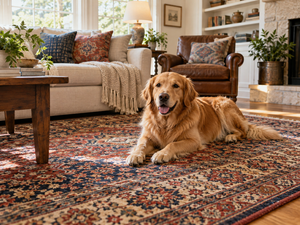
Pets can shorten the time between professional rug cleanings.
Even when no accidents occur, dogs and cats can leave hair, dander, body oils, and outdoor soil behind. A pet that spends time outside may carry fine dirt onto the rug several times a day.
Favorite resting spots may become noticeably dull because the same section receives repeated contact.
For homes with pets, professional rug cleaning every 6 to 12 months often makes sense.
Pet accidents can create a separate issue.
Urine may pass below the visible surface and affect deeper parts of the rug. A stain can appear small on top while odor remains in the backing or foundation.
If this happens, homeowners should not wait until the next routine cleaning date.
Safe-Dry® of Clear Lake provides pet odor and stain removal for situations where urine, odor, or other contamination requires additional treatment.
Prompt pet urine removal can make the problem easier to manage. Repeated accidents should also be treated as soon as possible rather than covered with deodorizing sprays.
Children often use rugs as part of everyday play.
A family room rug may become a place for toys, snacks, crafts, reading, and relaxing. This means the rug can collect crumbs, drink spills, dirt, and other debris even when adults are careful.
Children also spend more time sitting directly on the floor.
For that reason, families with young children often prefer to keep rugs on a more frequent cleaning schedule.
Professional cleaning every 6 to 12 months may be appropriate for rugs in busy family spaces.
Routine vacuuming between appointments can help reduce dry soil. Spills should also be handled quickly.
A clean white towel can be used to blot fresh liquid. Scrubbing should be avoided because it may spread the stain or disturb the fibers.
If the spill involves strong color, grease, pet urine, or an unknown substance, professional treatment may be safer than experimenting with several household products.

Dining room rugs often look cleaner than they are.
Food crumbs can fall into the pile and disappear quickly. Small beverage spills may dry before they are noticed. Chair movement can press debris farther into the fibers.
Grease and food residue may also become more difficult to remove over time.
A dining room rug should be inspected frequently, even if the room is not used every day.
Areas under the most frequently used chairs deserve extra attention. The space near the table edge can also collect more debris than the center.
Vacuuming beneath the table can help, but deeper cleaning may eventually be needed.
If the rug begins to hold food odor or looks dull around chair areas, professional rug cleaning may be appropriate before the usual schedule arrives.
Rugs near exterior doors receive some of the heaviest soil exposure in the home.
Shoes can carry sand, pollen, dirt, moisture, and pavement residue directly onto the rug.
In a busy Clear Lake household, an entry rug may receive dozens of contacts every day.
This type of rug may need professional cleaning every six months, depending on traffic.
A separate entry mat can help collect some soil before people step onto the handmade rug.
The mat should also be cleaned regularly. Once it becomes full of dirt, it can stop protecting the surrounding flooring effectively.
Entry rugs should be vacuumed frequently because dry grit can become abrasive when it is repeatedly pressed into the fibers.
Wool is commonly used in Oriental and handmade rugs because it is resilient, comfortable, and naturally beautiful.
However, wool should be handled carefully.
Soil can settle deep in the pile, especially when the rug is walked on regularly. Fine grit can gradually contribute to fiber wear.
The Canadian Conservation Institute advises that high humidity, excessive heat, light exposure, and dirt can all affect rugs and textile fibers over time.
For many wool rugs, professional cleaning every 12 to 18 months works well when traffic is moderate.
Homes with pets or children may need cleaning sooner.
The cleaning method should always be selected according to the rug rather than applying one standard process to every piece.
Safe-Dry® of Clear Lake evaluates rug material, stains, construction, and condition before determining how it should be cleaned.
Silk rugs should not automatically follow the same cleaning schedule as wool or synthetic rugs. It's fibers can be more sensitive to moisture, friction, and cleaning products.
A silk rug that receives very little traffic may go longer between professional cleanings because unnecessary handling should be avoided.
However, once soil or staining becomes noticeable, a professional evaluation is important.
Household carpet cleaners should not be used casually on silk rugs.
Strong cleaning products or too much moisture can affect texture, dye stability, and appearance.
Professional oriental rug cleaning helps ensure that the process is matched to the material.
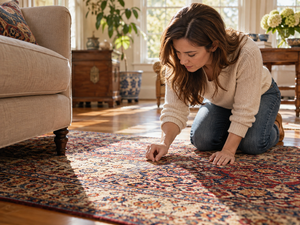
An antique rug may need a completely different approach from a newer handmade rug.
Older rugs can have worn areas, fragile fringe, weakened foundation threads, previous repairs, or sensitive dyes.
Because of this, cleaning frequency should be based on condition rather than a fixed schedule.
A valuable rug that receives very little foot traffic may not need annual deep cleaning.
Instead, careful vacuuming and professional inspection can be used to determine when deeper care is appropriate.
The Canadian Conservation Institute provides guidance on cleaning fragile textiles, and the same principle applies to delicate rugs: cleaning should be done carefully and only when the textile is stable enough to handle it.
For antique rugs, preserving the structure matters more than following a routine calendar.
A rug may need professional cleaning before the expected date.
Dull color is one common sign.
If the rug no longer looks as bright as protected areas beneath furniture, soil may be affecting the exposed fibers.
Odor is another clue.
A rug should not smell stale, musty, or strongly like pets when the rest of the room is clean.
Traffic patterns can also become visible. The areas leading from one doorway to another may begin to look darker than the edges.
Other signs can include sticky spots, stiff fibers, visible stains, pet odor, food residue, noticeable edge soil, or dust released when the rug is moved.
Professional cleaning should be scheduled when these signs appear rather than waiting several more months just to follow a preset calendar.
Homeowners can perform a simple rug check before deciding whether professional cleaning is needed.
Daylight often makes dull traffic areas easier to see.
Open nearby blinds or curtains and look across the surface rather than straight down.
Uneven color and high-traffic areas may become more obvious.
Check a section that has been protected by furniture.
If that area looks much brighter than the surrounding rug, soil may have accumulated across the exposed surface.
Only move furniture that can be handled safely.
Dust can collect along walls, furniture edges, and sections that the vacuum does not reach well.
Dark buildup along the perimeter may indicate that the rug needs more complete cleaning.
Leave the room for a while and return later.
People become accustomed to familiar household odors.
A pet or stale smell may be easier to notice after spending time away from the room.
Check where pets sleep or spend the most time.
These sections may collect more hair, oils, dander, and odor.
If more than 12 to 18 months have passed in a normally active home, the rug may be ready for inspection.
If pets or children use the rug every day, the interval may need to be shorter.
Consistent vacuuming can help keep handmade rugs cleaner between professional appointments.
Dry soil should be removed before repeated traffic pushes it farther down.
However, aggressive vacuuming can harm some handmade rugs.
Fringe should not be pulled into a rotating brush.
Very delicate fibers should be vacuumed with reduced suction when possible.
The vacuum should also be moved in a controlled way rather than repeatedly scraping across the same area.
The Canadian Conservation Institute recommends careful, low-suction surface cleaning for important textiles and rugs.
For most family rugs, gentle routine vacuuming provides a good first line of maintenance.
Professional rug cleaning still becomes necessary when deeper soil, stains, or odor remain.
High-traffic handmade rugs may benefit from light vacuuming once or twice a week.
Entry rugs and pet areas may need attention more often.
Low-traffic rugs may need vacuuming less frequently.
The goal is not to vacuum aggressively every day.
Instead, dry soil should be removed regularly before it becomes embedded.
For fragile or antique rugs, professional advice may be needed before using a rotating brush or high suction.
A dirty rug does not suddenly become ruined after a certain number of months.
However, soil can continue working deeper into the fibers.
Fine grit may create abrasion whenever people walk across the rug.
Pet hair and oils can also accumulate.
Food residue may begin to hold odor.
Older stains can become harder to improve.
Pet urine presents another concern because contamination can spread below the surface.
A spot that was not fully treated can continue producing odor long after the original accident.
Professional pet stain and odor removal may become more complicated once repeated accidents affect the same area.
Routine cleaning helps prevent these problems from becoming severe.
Yes.
A rug should not be cleaned simply because several months have passed.
Overcleaning a delicate handmade rug can expose fibers and dyes to unnecessary handling.
The ideal cleaning schedule depends on soil level, traffic, material, and condition.
A family room rug may genuinely need professional cleaning every six months.
A decorative antique rug may not.
Good rug care involves finding the balance between removing damaging soil and avoiding unnecessary treatment.
Clear Lake homeowners are familiar with humid conditions.
Humidity matters when rugs are cleaned because drying time can be affected by moisture in the air.
A rug should not remain damp longer than necessary.
Safe-Dry® of Clear Lake uses a low-moisture cleaning approach designed to reduce unnecessary water while helping rugs dry more efficiently.
Homeowners can learn more about the company's Clear Lake cleaning services and how low-moisture methods are used for local homes.
Controlled drying is especially important for natural fibers.
Thickness, weave, airflow, and indoor conditions will still affect actual drying time.
A regular cleaning schedule should never prevent a homeowner from addressing a fresh pet accident.
If a dog or cat has an accident two months after the rug was cleaned, the affected area should be handled promptly.
Start by blotting fresh liquid with clean white towels.
Press gently to absorb as much moisture as possible.
Scrubbing should be avoided.
Large amounts of water or cleaning solution should not be poured directly onto the rug.
If odor remains or the accident has reached deeper into the rug, professional treatment may be needed.
Pet stain removal, dog urine removal, cat urine removal, and odor elimination often work best when they are performed soon after the problem develops.
Spills do not follow a cleaning calendar either.
Coffee, juice, wine, food grease, and other liquids should be addressed promptly.
The first step should usually be blotting.
Use a clean white towel and absorb the spill without aggressive rubbing.
Household stain removers should be used carefully.
A product intended for standard wall-to-wall carpet may not be appropriate for a handmade wool or silk rug.
Several cleaners should not be layered over one another.
If a stain remains after safe blotting, professional rug cleaning may provide a more controlled solution.
Rugs tend to wear according to household traffic patterns.
One side may receive more foot traffic because of furniture placement.
Another side may receive more direct sunlight.
A pet may choose the same corner every day.
Rotating the rug periodically can help distribute some of this wear.
A 180-degree rotation can be useful when the size and room arrangement make it practical.
This does not replace professional cleaning, but it can help prevent one section from aging much faster than another.
Strong sunlight should also be managed where possible.
Curtains, shades, and furniture placement can help reduce direct exposure on valuable rugs.
Professional cleaning can also be useful before a rug is stored.
A rug should not be rolled away with food residue, pet contamination, heavy soil, or odor trapped inside.
The Canadian Conservation Institute recommends that textiles be cleaned appropriately before storage because dirt can contribute to deterioration and may attract pests. Homeowners can review its textile storage guidance for more detail.
The rug should also be fully dry before storage.
A damp rug should never be rolled and packed away.
When appropriate, rugs should be rolled rather than sharply folded.
A clean, dry, stable storage location can help preserve the rug until it is ready to be used again.
Handmade rugs should not always be treated like wall-to-wall carpet.
Carpet cleaning typically involves installed carpet that remains in place.
Oriental rugs can have very different fibers, dyes, fringe, backing, and construction.
A handmade rug may contain wool, silk, cotton, jute, synthetic fibers, or a combination of materials.
This is why the cleaning process should begin with inspection.
Safe-Dry® explains its approach to Oriental rug cleaning as a process that takes rug material, construction, stains, and other conditions into account.
Homeowners who search for carpet cleaners near them should make sure the provider has experience with specialty rugs.
The cheapest carpet cleaning option is not automatically the safest choice for a valuable handmade rug.
Before scheduling professional oriental rug cleaning, it helps to understand how the rug will be handled. A trustworthy cleaner should inspect the rug first, identify its fiber type, check dye stability, and review any pet stains or problem areas before choosing a cleaning method.
It is also worth asking how much moisture will be used, how the rug will be dried, and whether the company has experience with handmade wool, Oriental, Persian, or silk rugs. Clear explanations about the process can make it easier to feel confident that the cleaning method matches the rug’s construction and condition.
Rug cleaning prices vary because every rug is different.
Size affects cost, but it is only one factor.
Fiber type, condition, staining, pet contamination, construction, and required treatment can all influence the final estimate.
A small synthetic area rug with light soil will not require the same treatment as a large handmade wool rug with urine odor and several stains.
Additional services such as pet odor removal or stain removal may also affect pricing.
Rather than choosing a cleaner based only on cheap carpet cleaning offers, homeowners should compare the actual cleaning process.
A low price does not provide much value if the treatment is not appropriate for the rug.
Safe-Dry® of Clear Lake can provide an estimate after the rug and service needs are reviewed.
For a lightly used decorative rug, professional cleaning every 18 to 24 months may be enough. Gentle vacuuming and routine inspection should still be continued during that time.
A family living room rug will often benefit from cleaning every 12 to 18 months. The shorter end of that range may work better when daily traffic is heavy.
Homes with young children may need professional rug cleaning every 6 to 12 months, especially when snacks, toys, and playtime happen directly on the rug.
Pet households often fall into the same 6-to-12-month range. Pet accidents should be handled separately as soon as they happen.
Entry rugs may also need cleaning every 6 to 12 months because they receive concentrated soil from shoes and outdoor traffic.
Dining room rugs should be inspected regularly for food stains, crumbs, and oily residue. Depending on use, a cleaning interval of 6 to 12 months may make sense.
Guest-room rugs can usually go longer when they receive very little use.
Antique rugs should always be evaluated according to condition rather than a standard schedule.
Most normally used Oriental rugs can be professionally cleaned every 12 to 18 months.
Homes with pets, children, or heavier traffic may benefit from cleaning every 6 to 12 months.
Lightly used rugs may go longer.
Not always.
Annual cleaning can be appropriate for a heavily used family rug.
A lightly used or fragile rug may not need professional cleaning every year.
Usage and condition should guide the schedule.
Many wool rugs can follow a 12-to-18-month schedule.
Pet households and busy family rooms may need shorter intervals.
Antique wool rugs should be evaluated individually.
Regular vacuuming can help.
It removes loose soil before it settles deeper into the rug.
However, vacuuming cannot remove every stain, odor, oil, or embedded particle.
Professional cleaning will still be needed eventually.
High-traffic rugs often benefit from weekly vacuuming.
Some may need attention twice a week.
Low-use rugs may require less frequent cleaning.
Fragile rugs should be handled carefully.
Blot the liquid quickly with clean white towels.
Avoid scrubbing or flooding the rug.
If odor or staining remains, professional pet urine removal may be needed.
No.
Some stains permanently affect dyes or fibers.
Results depend on the substance, fiber type, age of the stain, and products already used.
Professional cleaning can often improve stains significantly, but complete removal cannot always be guaranteed.
Safe-Dry® uses family-focused cleaning methods that are designed to reduce unnecessary chemicals and excess moisture.
The cleaning method should still be matched to the rug's material and condition.
Drying time depends on rug thickness, fiber type, humidity, airflow, and the amount of treatment needed.
Low-moisture cleaning can help reduce drying time.
The rug should be fully dry before it is returned to normal use or placed into storage.
A move can be a good time for professional cleaning, especially if the rug will be stored.
The rug should be completely dry before it is rolled or packed.
Rental carpet machines should be used cautiously.
They can introduce too much water or detergent.
Handmade wool, silk, antique, and specialty rugs are usually safer when cleaned professionally.
Not automatically.
Fiber, construction, age, weave, dye type, and condition all matter.
Each rug should be evaluated before cleaning.
Loose pet hair can often be reduced through routine vacuuming.
Professional cleaning may be needed when hair is combined with odor, oils, stains, dander, or heavy soil.
It can help when dullness comes from soil.
However, cleaning cannot reverse sun fading, worn fibers, or permanent discoloration.
Handmade rugs do not need to be professionally cleaned on one rigid schedule.
For many homes, 12 to 18 months provides a useful starting point.
A busy family room rug may need attention every 6 to 12 months. A lightly used decorative rug may go 18 to 24 months. Antique and delicate rugs should be evaluated according to their condition.
Vacuuming, quick spill care, careful rotation, and protection from heavy sunlight can all help extend the life of a rug between deeper cleanings.
However, once dull traffic areas, pet odors, stains, or heavy buildup become noticeable, professional oriental rug cleaning should be considered even if the planned cleaning date is still several months away.
For homeowners in Clear Lake, TX, 77058, Safe-Dry® of Clear Lake can help determine whether a handmade rug is ready for cleaning and which process fits its construction.
If your Oriental, wool, Persian, silk, or handmade rug no longer looks as fresh as it once did, connect with Safe-Dry® of Clear Lake to request an estimate or schedule professional rug cleaning.
A good cleaning schedule is not about cleaning a rug as often as possible. The right approach is to clean it when it needs attention, use a method suited to the fibers, and continue simple maintenance between professional visits so the rug can remain a comfortable and beautiful part of your home for years to come.